


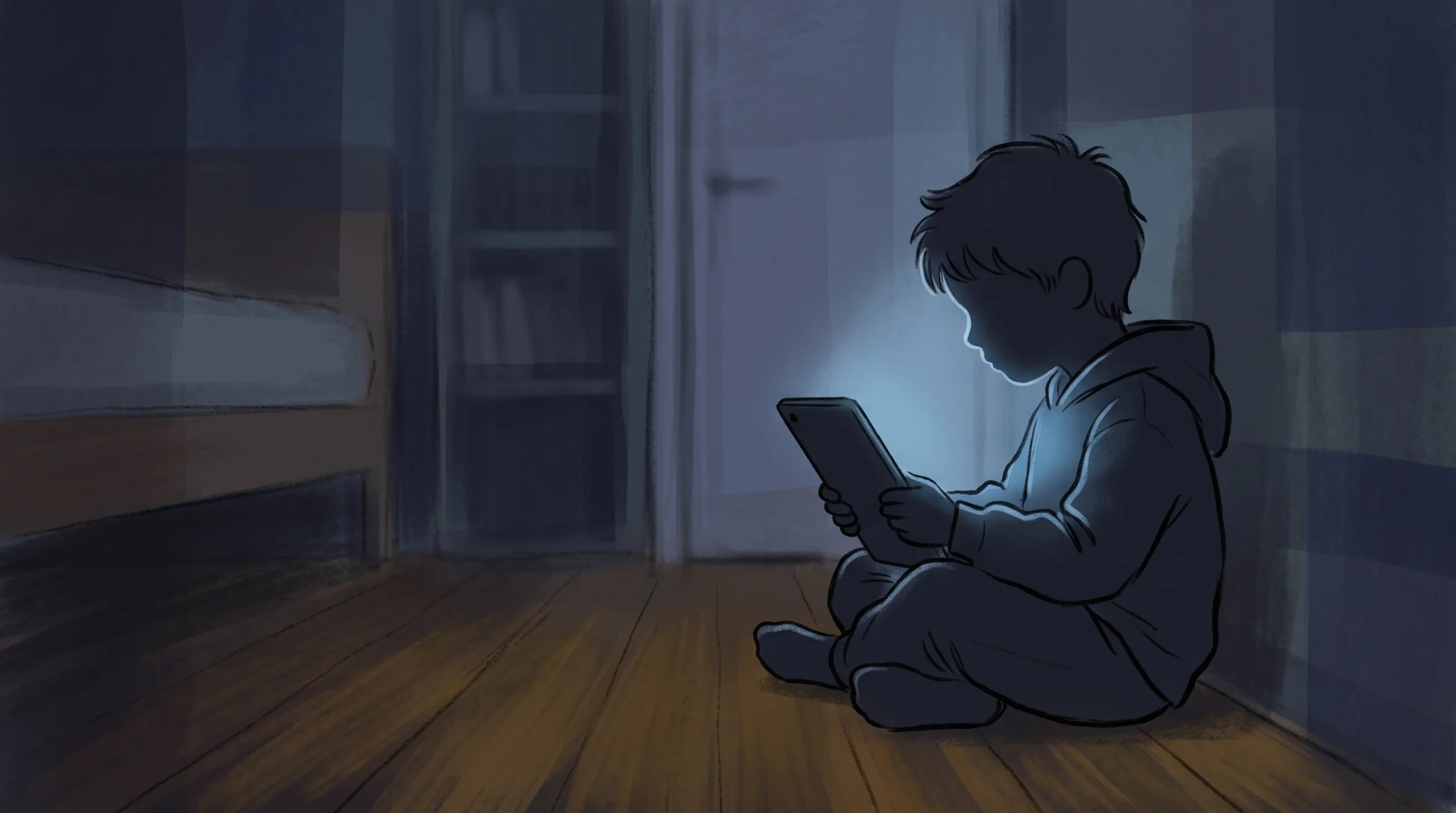
A major international review involving more than 2.8 million children has found that high levels of screen time are linked to increased mental health challenges. The research, led by the University of Calgary in Canada, analysed data from 64 countries to provide one of the most comprehensive looks at how digital devices affect young people.
The “umbrella review” synthesised a vast range of existing large-scale studies, identifying “high” screen exposure as a significant risk factor in child development. Researchers found that children with higher screen usage were more likely to experience internalising behaviours, such as anxiety and depression, alongside externalising issues including aggression and symptoms of ADHD.
While the study highlighted broad concerns regarding emotional regulation, it also revealed notable gaps in the impact on specific academic subjects. Researchers found no significant association between total screen time and a child’s performance in mathematics, reading, or science, suggesting that the developmental impact may be more closely tied to social and communicative milestones than specific classroom curricula.


Scale of the impact
Experts have been careful to distinguish between correlation and causation. The review identifies a clear link between high screen use and developmental challenges, but it does not definitively prove that screens are the direct cause. Other factors, such as the type of content being consumed or the reduction in face-to-face social interaction, may play a significant role in the outcomes observed.
The findings have been met with interest by the scientific community, with some experts noting that the lack of specific data on maths and science attainment could be due to a shortage of studies focusing on those particular areas. Detailed expert reactions to the findings can be found via the Science Media Centre.
UK context and current guidance
The publication of the review comes as the UK government continues to debate potential restrictions or curfews on social media use for those under the age of 16. Current NHS advice in the UK does not set a specific time limit for screen use but focuses on ensuring that digital devices do not replace essential activities such as physical exercise or sleep.
World Health Organization (WHO) guidelines remain more prescriptive, recommending zero screen time for children under one year old and a maximum of one hour per day for those aged between two and four.
For parents and guardians, the study identifies several domains of concern, particularly regarding emotional regulation. While gaming, social media, and streaming were all included in the data, the research suggests that the context of use remains an important factor for future investigation, including whether video calls with family carry the same risks as passive content consumption.