



Hartlepool Borough Council has granted planning permission for the Greatham North East flood alleviation scheme, a £25 million project designed to protect critical industrial sites while restoring rare coastal habitats in the Tees Estuary.
The proposal, which was formally approved by the council’s planning committee on 25 September 2026, is a flagship component of the wider £30 million Tees Tidelands Programme. Construction is scheduled to begin in early 2027 and is expected to take approximately two years to complete.

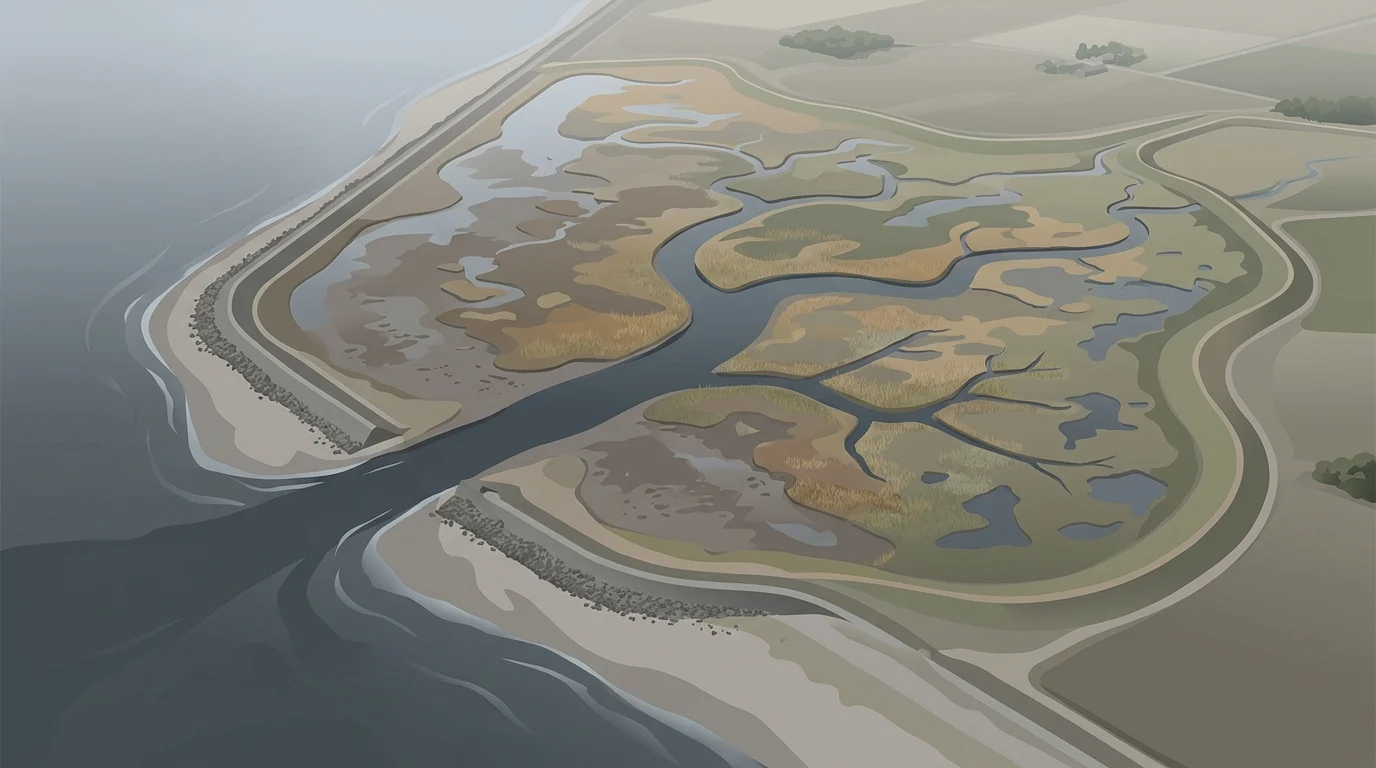
The scheme aims to safeguard major chemical and petrochemical plants located within the Teesside industrial corridor. These facilities are described by project organisers as being of national economic significance, making their protection from tidal flooding a priority for the region.
Engineering and habitat restoration
The project involves a process known as managed realignment. Existing embankments at Greenabella Marsh and Greatham Creek, which are currently in poor condition, will be breached. This will allow the tide to flow back into the area, recreating approximately 20 hectares of intertidal habitats, including saltmarsh and mudflats.
To maintain protection for the surrounding area, a new 1.5km-long embankment will be constructed further inland at Greenabella Marsh. The Environment Agency intends to source the clay for this new structure from nearby Marsh House Farm. The excavation of this material will serve a dual purpose, creating a new saline lagoon habitat on the farm site once the works are finished.
This environmental aspect of the project fulfils a legal requirement for the Environment Agency to provide compensatory habitat for previous developments within the estuary. According to Teesside Live, the scheme effectively restores coastal landscapes that have been lost to industrialisation over the last 200 years.
Public access and infrastructure
The development will result in some changes for visitors to the area. A permanent diversion of a Public Right of Way is required to accommodate the new embankment. However, the plans also include enhancements for the local community and birdwatchers, such as the installation of a new bird hide and updated interpretation boards providing information on the local ecosystem.
While the project is expected to involve significant movements of materials, details regarding the management of construction traffic on the A178 Tees Road will be finalised as part of the pre-construction phase. The scheme stands as one of the most significant environmental infrastructure investments in the region, balancing the needs of heavy industry with the restoration of the North East’s natural heritage.